Your students trained for months for their first IBJJF event. At the gi check, an inspector stops one of them: the sleeves sit too far above the wrist, and the patch on the chest is too close to the lapel. They need another gi before they can compete, and the academy gi with your name on it is the reason.
If you run a BJJ academy or a fightwear brand, competition gis are the one uniform you cannot get roughly right. This guide explains what makes a gi IBJJF legal, why academy gis fail the gi check, and exactly what to tell a manufacturer so your team's custom gis pass, wash after wash.
What makes a gi IBJJF legal?
The IBJJF publishes its uniform rules on its website, and it updated them after the 2024 Gi World Championships. As we checked them in October 2026, the main requirements are:
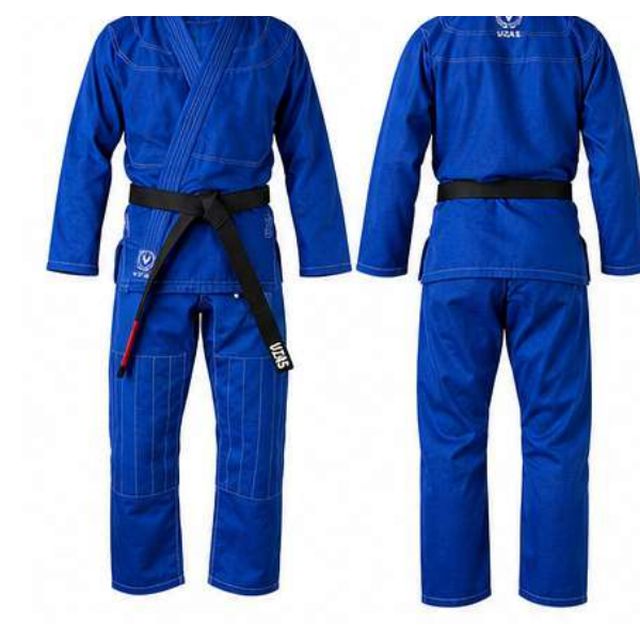
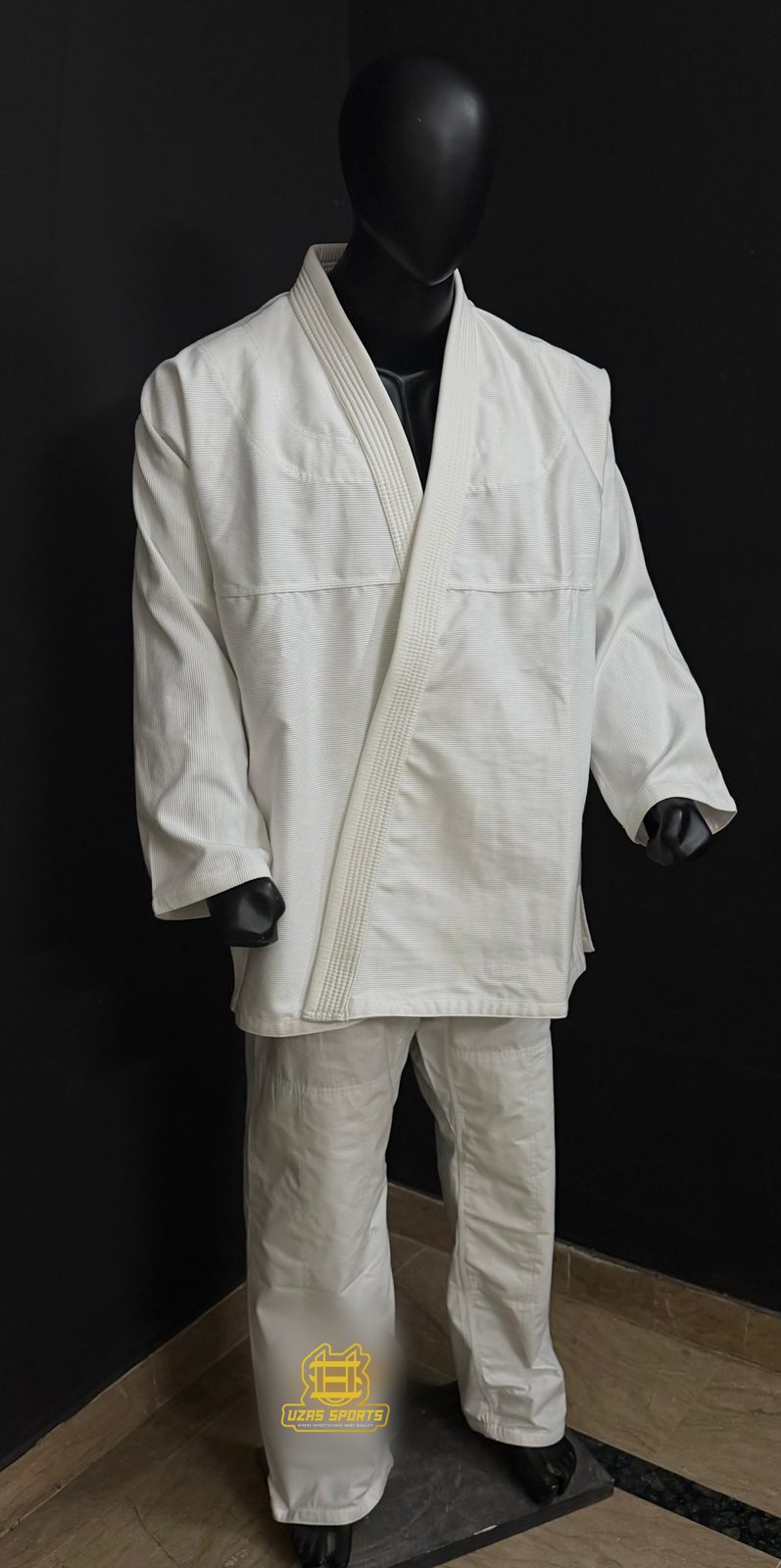
- Colour: white, royal blue or black, in one colour. The jacket, pants and collar must match.
- Fabric: woven cotton or a cotton-like fabric, not so thick or hard that an opponent can't grip it.
- Collar: a lapel no thicker than 1.3 cm and a collar no wider than 5 cm.
- Sleeves: no more than 2 cm from the wrist with the arm straight out in front, and a sleeve opening of no more than 7 cm at full extension.
- Jacket: long enough to reach the thigh.
- Pants: no more than 2 cm above the ankle bone.
- Patches: cotton, properly sewn on, and only in the areas the IBJJF rule book allows.
- Belt: 4 to 5 cm wide, in your rank colour with a black bar (white or red for black belts).
These rules can change, so before you sign off a competition gi design, download the current IBJJF uniform rules and check your layout against them. If your students also enter other federations or local events, check those rule books too.
Why do academy gis fail the gi check?
Inspectors check uniforms before competitors step on the mat, and a gi that fails has to be swapped for one that passes. When an academy's team gis fail, it is rarely the fabric. It is almost always one of these:
- Sleeves or pants that are too short. The gi fitted when it arrived but shrank in the wash, or the student was given the wrong size.
- The wrong colour. Grey, navy, red or camo gis look great in the academy but are not allowed at IBJJF events.
- A jacket and pants that don't match, for example a white jacket with off-white pants from a different batch.
- A collar that is too thick or too wide, usually on gis built for durability rather than competition.
- Patches in the wrong place, too close to the lapel, made of the wrong material, ironed on, or coming loose at the edges.
Almost every one of these problems is decided when you order, not on competition day. That is good news, because it means a clear brief to your manufacturer fixes most of them.
Which colour should our competition gis be?
For IBJJF competition, order white, royal blue or black. White is the easiest to match between batches and to reorder later. Black and royal blue show the academy colours well, but ask your supplier to keep the same dye and fabric for reorders so new gis match the old ones.
Many academies run two ranges: a competition gi in one of the three allowed colours, and a training or merch gi in a colour that matches the academy brand. We make our gis in white, royal blue and black for competition, plus red, purple, light grey, olive green and camouflage for training and academy wear.
How do we stop sleeves and pants ending up too short?
This is the most common reason a gi that fitted on day one fails a few months later. Cotton gis can shrink, especially in hot washes and tumble dryers, and the rules leave little room on sleeve and pant length. Three things help:
- 1.Ask your manufacturer how the fabric is treated before cutting and what shrinkage to expect after washing.
- 2.Size from a chart in centimetres, not from a guess. Our size guide has the BJJ gi size chart for A0 to A5.
- 3.Wash the prototype the way your students will, then measure the sleeves and pants again with the arm straight out before you approve bulk.
If students sit between two sizes, the larger size is usually safer for competition, because a sleeve that is a little long can be taken up, but a sleeve that is too short cannot be fixed. Our guide to BJJ gi shrinkage goes into washing and sizing in more detail.
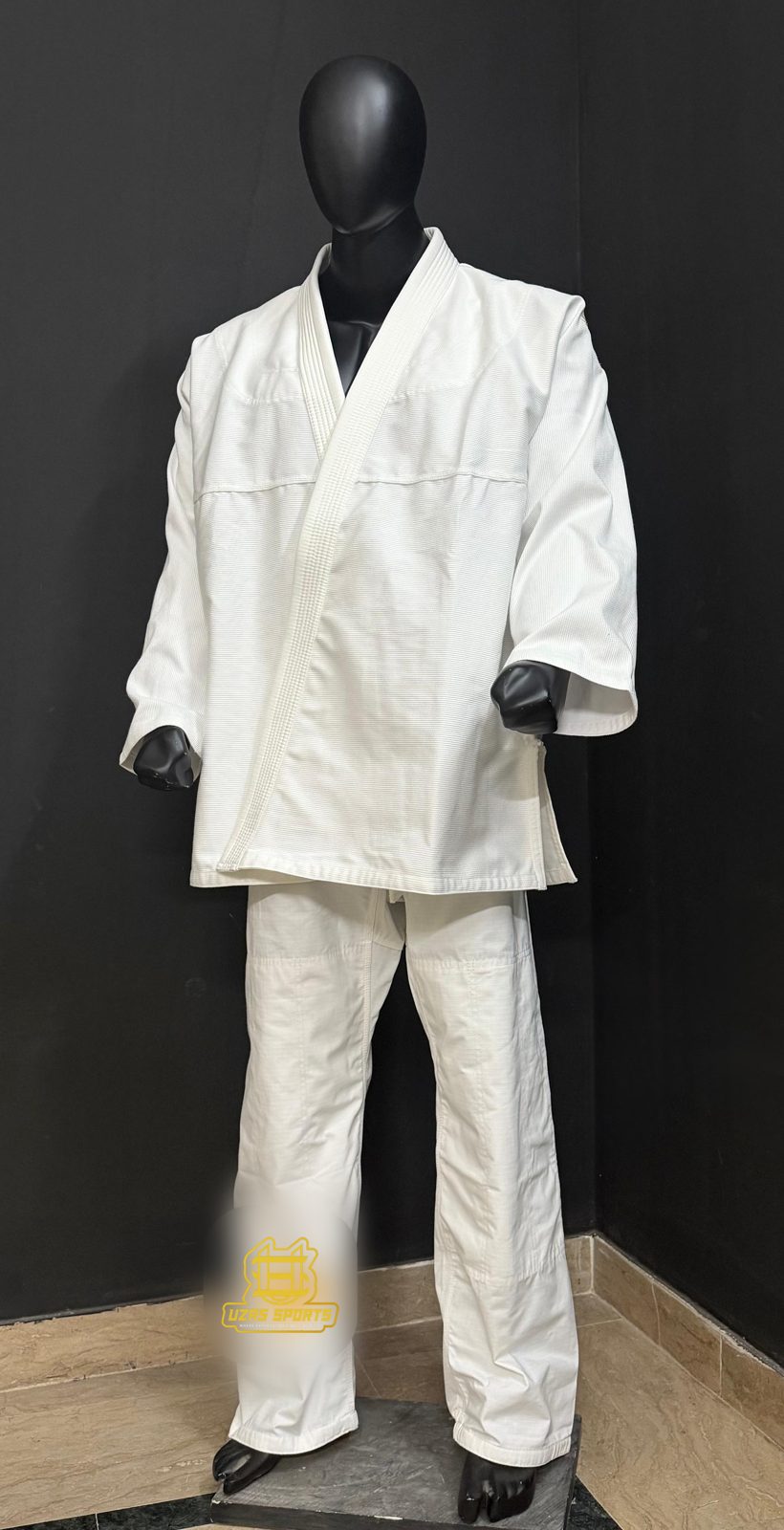
Where can our academy patches go on a competition gi?
Your academy logo can go on a competition gi, but only in the areas the IBJJF rule book shows, and recent updates restrict patches and labels next to the lapel. Patches should be cotton and properly sewn on all the way round. Iron-on patches that start to peel are a common reason for a failed check.
The simplest approach is to plan your competition layout first, using the rule book diagram, and then use the same layout on every gi. Our BJJ gi patch placement guide shows the usual positions on the shoulders, back, chest and pants.
What should we send a manufacturer for an IBJJF legal team order?
Use this checklist when you ask for a quote. It gives the factory everything it needs to make a gi that passes, and it makes quotes from different BJJ gi manufacturers easier to compare.
- 1.Purpose: say clearly that the gis are for IBJJF competition, so the supplier works to the uniform rules.
- 2.Colour: white, royal blue or black, with jacket, pants and collar in the same colour.
- 3.Fabric and weight: for example our standard 450 gsm pearl weave for the jacket.
- 4.Collar: ask the supplier to confirm the lapel and collar measurements meet the current rules.
- 5.Sizes and quantities: a size run in A0 to A5 plus any youth sizes, based on measurements, not guesses.
- 6.Patches and embroidery: your logo files (ideally vector, such as AI, EPS, PDF or SVG), patch sizes and a placement drawing checked against the rule book.
- 7.Patch material: cotton patches, sewn on, never iron-on for competition gis.
- 8.Belts: if you are ordering belts too, 4 to 5 cm wide in the right rank colours.
- 9.Labels and packaging: your own neck labels, swing tags and packaging if you are a brand.
- 10.Deadline: the date of your first event, so production and shipping can be planned around it.
- 11.Prototype: a customised prototype with your logo to measure, wash and approve before bulk.
How long does it take to get team competition gis?
Plan backwards from your first event. Allow time to approve the prototype, then 2 to 4 weeks for bulk production, then shipping. We use air freight for prototypes and urgent orders and sea freight for bulk, so if an event is close, tell us the date when you ask for a quote. Students also need time to wash and try their gis before competition day.
If you are still working out a budget, our guide to what drives the cost of a custom BJJ gi explains how fabric, branding and quantity affect the price.
How UZAS Sports makes IBJJF legal gis for academies
UZAS Sports has made martial arts uniforms in our own factory in Sialkot, Pakistan since 2005, with a showroom in Sialkot and booking offices in Melbourne and Chicago. Our standard custom BJJ gi is a 450 gsm pearl weave in adult sizes A0 to A5 plus youth sizes, and our competition gis are made to IBJJF uniform rules: one colour in white, royal blue or black, a 1.3 cm lapel and 5 cm collar, and cotton patches sewn on in the permitted areas.
There is no minimum order, so you can start with your competition team and add the rest of the academy later. We make a complimentary customised prototype with your logo for you to approve, our team offers free design help with patch layouts, and orders of 25 pieces or more ship free. Brands can add their own neck labels, swing tags and packaging.
Common questions
What makes a BJJ gi IBJJF legal?
The IBJJF uniform rules ask for a woven cotton or cotton-like gi in one colour (white, royal blue or black) with jacket, pants and collar matching, a lapel no thicker than 1.3 cm and a collar no wider than 5 cm, sleeves that reach within 2 cm of the wrist with the arm straight out, a jacket that reaches the thigh, pants within 2 cm of the ankle bone and cotton patches sewn on only in the permitted areas. Rules change, so always check the current IBJJF uniform page before you order.
Can a custom academy gi with our logo be IBJJF legal?
Yes. A custom gi can carry your academy embroidery and patches and still be IBJJF legal, as long as the gi is one of the allowed colours, the cut meets the measurements and the patches are cotton, properly sewn and placed only in the areas the rule book allows. Our custom BJJ gis are made to these rules for competition.
Why do gis fail the IBJJF gi check?
The most common reasons are sleeves or pants that are too short, often because the gi shrank or the size was wrong, a collar that is too thick, a colour that is not white, royal blue or black, a jacket and pants that do not match, and patches that are loose, iron-on or outside the permitted areas.
Are coloured gis like grey, red or camo allowed at IBJJF events?
No. IBJJF events accept white, royal blue or black gis only. Colours like grey, red, purple, olive or camo are fine for training, academy wear and many local events, but not for IBJJF competition, so order your team's competition gis in an allowed colour.
Can we check a competition gi before ordering in bulk?
Yes. UZAS Sports makes a complimentary customised prototype with your logo and patches, so you can measure it against the IBJJF rules on a real student, wash it as you normally would and check it again before you approve bulk production. Bulk then usually takes 2 to 4 weeks.
- #IBJJFLegalGi
- #BJJGi
- #CustomBJJGi
- #BJJGiManufacturer
- #BJJAcademy
- #CompetitionGi
- #MadeInSialkot