Your academy has a new logo, the gis are on order and a few of your students are entering their first tournament next month. Then someone asks: is the back patch too close to the collar? Will the referee make me take it off? It's a common worry. Patches are a big part of BJJ culture, but a patch in the wrong place, sewn the wrong way or in the wrong material can mean a student scrambling with scissors at gi check.
This guide is for academy owners, head instructors and fightwear brands planning patches for custom BJJ gis. It covers where patches usually go, which areas to keep clear for competition, which patch types hold up best, and how to get placement right before you order for the whole mat.
Where do patches usually go on a BJJ gi?
Most academy gis follow a familiar layout. You don't need to use every spot. Two or three well placed patches usually look cleaner than six.
- Upper back: the biggest space on the gi and the natural home for the academy name or a large crest, placed below the collar.
- Shoulders and upper arms: a good spot for your logo, a flag or an affiliation patch. Many academies put the logo on one shoulder and a flag on the other.
- Chest: a small logo patch on the jacket, kept away from the lapel itself.
- Pants: a patch on the upper front thigh or near the hip, often a smaller version of the academy logo.
If you are also planning embroidery, keep the two consistent. A common combination is an embroidered logo on the chest or skirt of the jacket, plus sewn patches on the back and shoulders. Our guide to custom BJJ gis and rash guards for academies covers the rest of the gi spec.
Which areas should we keep clear if students compete?
If your students compete under IBJJF rules, the rule book includes a diagram of the areas where patches are allowed, and gi inspectors check it. The main points to plan around are:
- Patches only go in the authorised areas shown in the rule book. Anything outside those areas can be asked to come off.
- Patches should be cotton and properly sewn on. Loose edges or iron-on patches that are peeling can fail inspection.
- Recent updates restrict patches and labels next to the lapel, so keep chest patches clear of the collar and lapel.
- On the pants, logos and patches are limited to the upper part of the leg, away from the hems.
- The gi itself must be one uniform colour, and IBJJF events accept white, royal blue or black.
Other federations and local events can have their own rules, and all of them change from time to time. Before you lock in a design, download the current rule book for the events your students enter and check your layout against it. It's much easier to move a patch on the prototype than on 60 finished gis.
Embroidered, woven or printed: which patch type works best on a gi?
A gi is heavy cotton that gets gripped, pulled and washed hot after almost every class, so the patch needs to cope with all of that. The two most popular choices are:
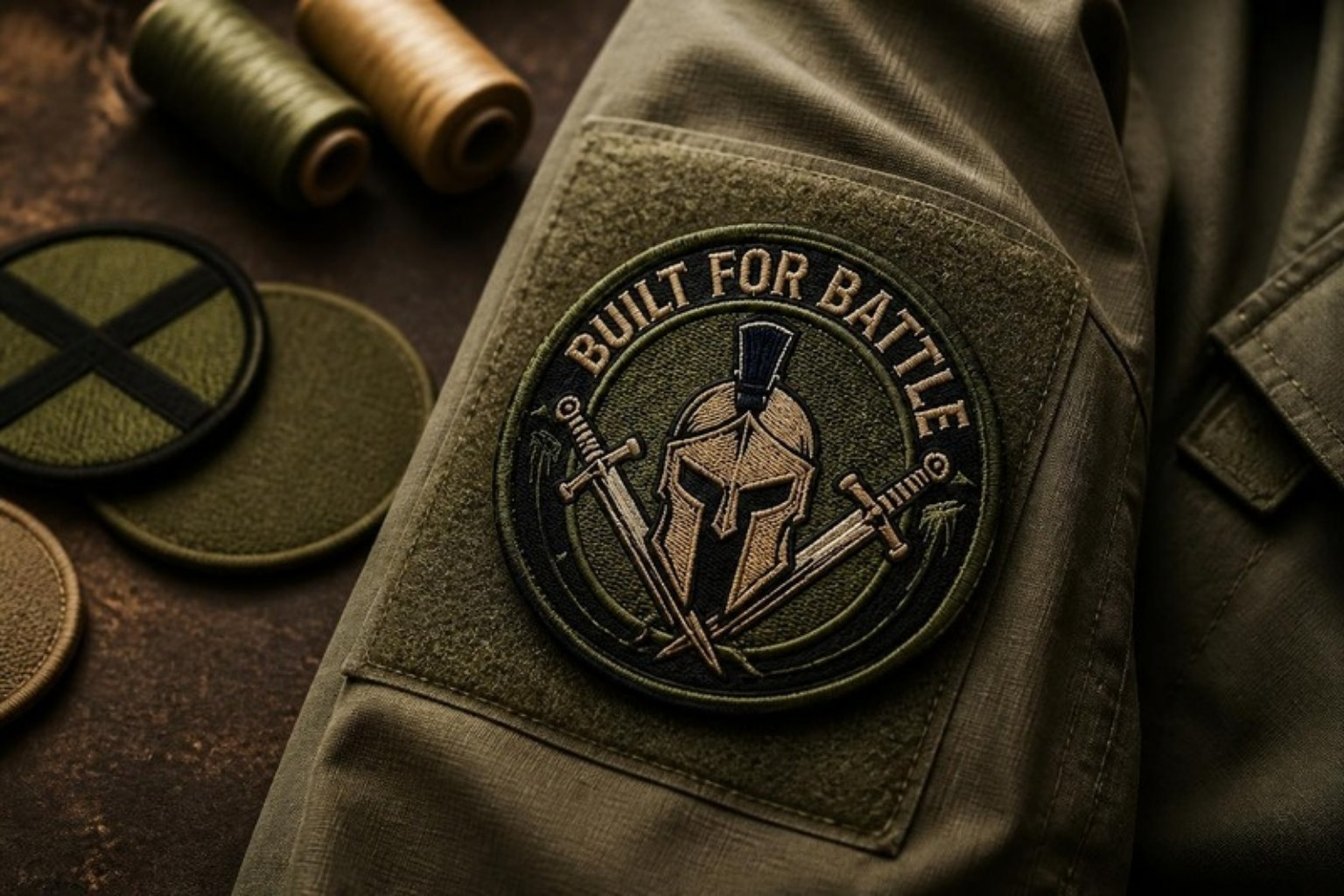
- Embroidered patches: raised thread on a twill backing. They look classic, feel substantial and suit bold logos with a few solid colours.
- Woven patches: flatter and thinner, with finer threads. They hold small lettering and detailed logos better and feel less stiff on the shoulder.
Rubber and PVC patches look great on bags and jackets, but they are usually a poor fit for competition gis, where federations expect cotton patches. Our comparison of embroidered, woven and PVC patches explains the differences in more detail. Whatever you choose, ask for a sew-on version. Iron-on backing alone tends to lift after repeated hot washing.
How big should each patch be?
There is no single correct size, but a few simple checks help:
- 1.Measure the space on your smallest gi size. A back patch that looks right on an A3 can swallow an A0 or a kids' gi, so you may need two sizes of the same patch.
- 2.Leave a margin. Keep patches clear of seams, the collar and the skirt hem so they sit flat and don't stiffen the areas that need to move.
- 3.Think about readability. Thin script and tiny text get lost in embroidery. If your logo has fine detail, choose a woven patch or simplify the artwork.
- 4.Keep the colour count sensible. A few strong colours read better from across the mat than a photo-style logo.
Should patches be sewn on at the factory?
You can buy patches loose and have a local tailor sew them on, but for academy orders it's usually better to have them attached before the gis ship. Factory stitching puts every patch in exactly the same spot on every gi, uses stitching that suits heavy pearl weave, and saves your staff an evening of sewing. Loose spare patches are still handy for students who already own a gi.
One more tip: plan the patches and the gi together. Pre-shrunk fabric and the right sizing matter as much as the artwork, and our guide on why BJJ gis shrink explains how to order gis that still fit after washing.
What should we check on the prototype?
Before you approve a full academy order, put the prototype gi on a student and check it in class, not only on a hanger:
- Is every patch in an area allowed by the rules your students compete under?
- Are the colours right against the gi colour, especially on royal blue and black gis?
- Is the stitching tight all the way around, with no loose corners?
- Does the back patch sit straight and clear of the collar when the student is standing and moving?
- Does the patch still look good after a couple of hot washes?
How UZAS Sports makes custom gis with patches
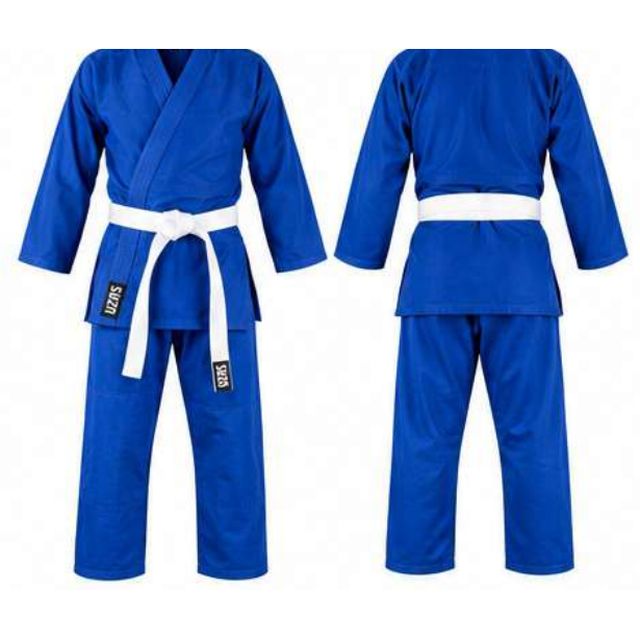
UZAS Sports has made martial arts uniforms in our own factory in Sialkot, Pakistan since 2005, with a showroom in Sialkot and a booking office in Melbourne. We make custom BJJ gis, with our standard gi in 450 gsm pearl weave, and we also make embroidered and woven patches, so your gis can arrive with the patches already sewn on. Fightwear brands can add their own neck labels, swing tags and packaging through private label.
There is no minimum order. Your complimentary prototype is customised with your logo so you can check placement and colours before bulk production, which usually takes 2 to 4 weeks. Our team offers free design help if you need your logo adapted for embroidery, and orders of 25 pieces or more ship free. Prototypes and urgent orders travel by air freight, and bulk orders can go by sea. Have more questions? Our buyer FAQ covers ordering, shipping and payment.
Common questions
Where do patches usually go on a BJJ gi?
The most common places are the upper back below the collar, the shoulders and upper arms, the chest or upper lapel area of the jacket, and the upper thigh of the pants. Academies often use a large back patch for the academy name, a shoulder patch for the logo and a smaller patch on the pants.
Are there rules about patches for IBJJF competitions?
Yes. The IBJJF rule book shows the areas of the gi where patches are allowed, says patches should be cotton and properly sewn, and restricts patches close to the lapel and near the pant hems. Inspectors can ask for patches in the wrong place to be removed. Always check the current rule book for the events your students enter, because rules are updated.
Should gi patches be embroidered or woven?
Both work. Embroidered patches give a raised, classic look and suit bold logos. Woven patches are flatter and hold small text and fine detail better. Whichever you choose, make sure it can be sewn on, not only ironed on, so it survives regular hot washing.
Can patches be sewn on before the gis are delivered?
Yes. Ordering gis with patches already stitched in place saves your staff time and keeps placement identical on every gi. UZAS Sports can make the gis and the patches together and sew them on before shipping.
Is there a minimum order for custom gi patches?
Some suppliers set one. UZAS Sports has no minimum order for gis or patches, so you can start with a small batch for your instructors and add more for students later. Orders of 25 pieces or more ship free.
Can we check the patch placement before ordering for the whole academy?
Yes. UZAS Sports makes a complimentary prototype customised with your academy logo, so you can check patch size, colour, position and stitching on a real gi before you approve bulk production.
- #BJJGi
- #BJJPatches
- #GiPatches
- #CustomPatches
- #AcademyGis
- #BrazilianJiuJitsu
- #MadeInSialkot