You ask two manufacturers to quote for a custom gi for your academy. One price looks reasonable, the other is far higher, and a third supplier on a marketplace is cheaper than both. Which one is right? Most of the time the answer is that none of the quotes describe the same gi. Fabric, branding, colours, labels and shipping can all change the price, and a low quote often leaves something out.
This guide explains what actually drives the cost of a custom BJJ gi, how to compare quotes fairly, where an academy or new fightwear brand can save money, and where cutting cost usually backfires. We do not list prices here, because a fair price depends on your exact spec. What we can show you is how to get quotes you can trust.
Why do quotes for custom BJJ gis vary so much?
A gi is not one standard product. Two gis can look the same in a photo and be made from different fabric weights, use different pants material, carry three logos or seven, and arrive in a plain bag or a branded box. Each of these choices adds or removes cost.
The other big difference is who you are buying from. A factory quotes its own production cost. A trading company or agent adds a margin on top, and may not know the exact fabric the factory will use. Our guide to sourcing sportswear from Sialkot explains how to tell a real factory from a middleman.
Finally, check what each quote includes. Some prices include delivery to your door, some are ex-factory, and some leave out the prototype, labels or packaging. A cheap price per gi can become an expensive order once these are added.
What actually drives the price of a custom gi?
Fabric weave and weight
Fabric is one of the largest parts of the cost. Gi jackets are woven cotton, and weight is measured in gsm (grams per square metre). A heavier jacket uses more cotton, so it costs more to make and more to ship. The weave also matters, because some weaves are denser and take more yarn.
Heavier is not always better for an academy. Very heavy jackets are hot in long classes and slow to dry, and students may not wash them as often as they should. Our standard BJJ gi is a 450 gsm pearl weave, which is strong enough for daily grip fighting but light enough for everyday training. If you want something different, ask your supplier to state the weave and gsm in writing so you can compare like with like.
Pants fabric and construction
Pants are often where cheaper gis save money without telling you. Check what the pants are made from, whether the knees are reinforced, and how the waist closes. Reinforced stress points at the knees, crotch and jacket seams add sewing time, but they are also what stops a gi tearing in its first few months.
Branding: embroidery and patches
Every logo adds cost. Embroidery is priced on how much stitching it needs, so a small chest logo costs far less than a large, detailed back design in several colours. Patches are made separately, then sewn on, so each extra patch adds material and labour. A gi with logos on the chest, back, both shoulders and the pants leg costs noticeably more than a gi with one chest logo and one back design.
Before you ask for a quote, decide which positions really matter to your academy. Our BJJ gi patch placement guide shows the usual positions and which areas to keep clear if your students compete.
Colour
White, blue and black are the common gi colours. A custom colour, contrast collar, coloured stitching or a two-tone design adds work in dyeing and sewing. If you want a signature colour, ask about it at quote stage, not after the prototype.
Labels, tags and packaging
For a fightwear brand, private label details are part of the product: woven neck labels, care labels, swing tags, a branded gi bag or box. Each one is a separate item with its own cost. Academies selling gis at the front desk can often skip the box and keep a simple branded label.
Sizes
Larger sizes use more fabric, and special sizes such as long, heavy or women's cuts may need their own patterns. A sensible size run keeps the order lean. Our guide to BJJ gi sizes for academy orders shows how to plan one from your own students.
Quantity
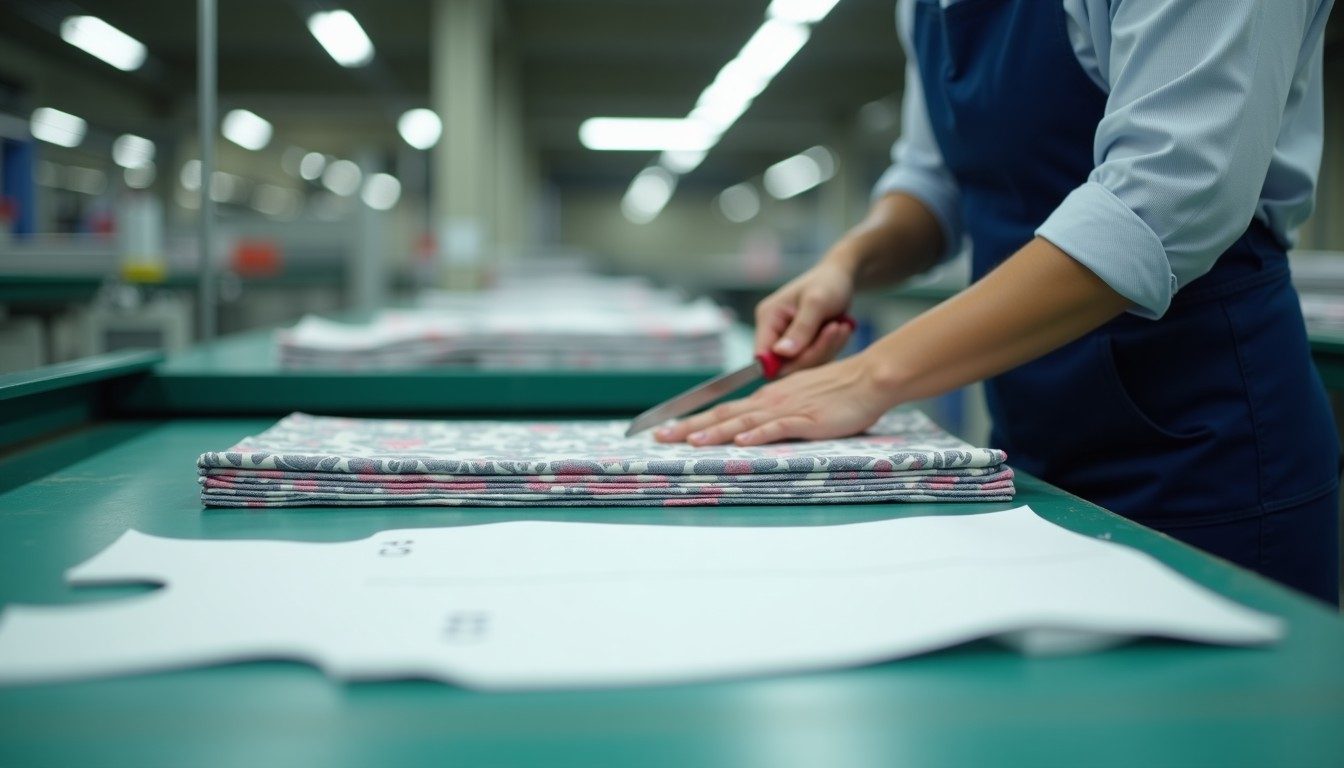
Some work is done once per order, whatever the quantity: preparing the design, setting up your logo for embroidery, cutting patterns and making the prototype. On a small order, that work is shared by fewer gis, so the price per piece is usually higher. As quantity grows, the price per gi tends to come down. Because UZAS Sports has no minimum order, you can start small and reorder once you know which sizes sell.
Shipping and import costs
Gis are heavy, so shipping is a real part of the landed cost. Air freight is fast and suits prototypes and urgent orders. Sea freight is slower and usually better value for bulk. Import duties and taxes depend on your country, so ask whether your quote is delivered with them included or whether you will pay them on arrival.
How do I compare two gi quotes fairly?
Send every supplier the same written spec, then check each quote against this list before you look at the price.
- 1.Jacket fabric: is the weave and gsm stated in writing?
- 2.Pants: what fabric, and are the knees reinforced?
- 3.Branding: does the quote cover every logo position you asked for, and is each one embroidery or a patch?
- 4.Colour: are the gi, collar and stitching colours the ones you asked for?
- 5.Labels and packaging: are neck labels, swing tags and bags included or extra?
- 6.Sizes: does the quote cover your full size run, including any long, heavy, women's or kids' sizes?
- 7.Prototype: is a customised prototype with your logo included before bulk production, and what does it cost?
- 8.Lead time: how long is bulk production after you approve the prototype?
- 9.Shipping: is delivery to your door included, by air or sea, and are duties and taxes included?
- 10.Who makes it: is the supplier the factory, or a trader passing your order on?
If two quotes still differ after this check, ask the cheaper supplier what is different. A clear answer is a good sign. A vague one is a warning.
Where can an academy save money without buying a worse gi?
- Cut logo positions, not fabric. One strong chest logo and one back design often look better than five small logos, and cost less.
- Combine logos into one patch. A single patch with your academy name and crest takes less sewing than several separate badges.
- Stick to standard colours for your first order, and save a custom colour for a limited run later.
- Order the sizes you need. A size run planned from your students avoids paying for gis that sit on the shelf.
- Add rash guards, shorts or belts to the same order where it makes sense, so they share one prototype round and one shipment.
- Use sea freight for bulk if you can plan ahead, and keep air freight for prototypes and urgent top-ups.
Where should you not cut corners?
Some savings cost more later. A jacket that is too light tears at the collar and sleeves. Pants without reinforced knees wear through quickly. Fabric that is not pre-shrunk can leave students with a gi a size too small after a few washes, which is why our guide on why BJJ gis shrink is worth reading before you order. And skipping the prototype to save a week is the most expensive shortcut of all, because any mistake is then repeated across the whole run.
What should I send to get an accurate gi quote?
- 1.Your logo in the best file you have, ideally a vector file such as AI, EPS, PDF or SVG.
- 2.Where each logo should go, and whether you want embroidery or patches.
- 3.Gi colour, collar colour and any contrast stitching.
- 4.Your size run, or the number of students and a rough size spread.
- 5.Whether you need private label items: neck labels, swing tags, bags or boxes.
- 6.Your delivery country and the date you need the gis by.
With this, a manufacturer can quote the gi you actually want instead of a generic one. Our buyer FAQ answers common questions on ordering, prototypes and shipping.
How UZAS Sports quotes custom BJJ gis
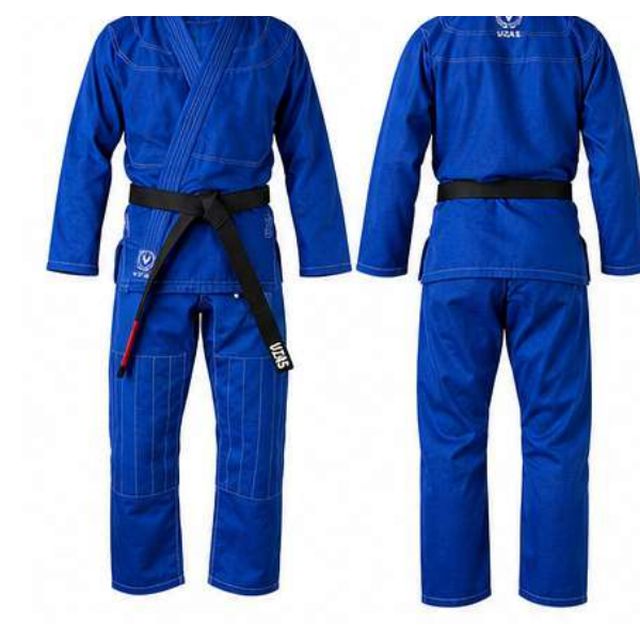
UZAS Sports has made martial arts uniforms in our own factory in Sialkot, Pakistan since 2005, with a showroom in Sialkot and a booking office in Melbourne. Because we make the gis ourselves, we quote from your exact spec, and our team offers free design help to keep your branding simple and effective. Our standard custom BJJ gi is a 450 gsm pearl weave, branded with your embroidery and patches, and brands can add their own neck labels, swing tags and packaging.
There is no minimum order. We make a complimentary customised prototype with your logo for you to approve before bulk production, which usually takes 2 to 4 weeks. Orders of 25 pieces or more ship free, with air freight for prototypes and urgent orders and sea freight for bulk.
Common questions
Why is one custom BJJ gi quote so much higher than another?
Usually because the two quotes are not for the same gi. Fabric weave and weight, pants fabric, the number of embroidery and patch locations, colour, labels and packaging, and whether shipping is included can all differ. Ask both suppliers to quote the same written spec before you compare the price.
Does a heavier gi always cost more?
In general, yes. A heavier jacket uses more cotton per gi, and fabric is one of the biggest parts of the cost. A heavier gi is not automatically better for an academy, though. Our standard BJJ gi is a 450 gsm pearl weave, which is strong enough for daily training and light enough for long classes.
Is it cheaper to use patches or embroidery on a gi?
It depends on the size and number of logos. A small embroidered chest logo is often simple, while a large back design with many colours takes more stitching. Patches are made separately and then sewn on, so each extra patch adds material and sewing time. Fewer, well-placed logos usually give the best value.
Do I need to order a large quantity to get a fair price per gi?
Not with UZAS Sports. There is no minimum order, so you can order the exact sizes your academy needs. Set-up work such as digitising your logo and making the prototype is spread across more pieces on larger orders, so the price per gi tends to improve as quantity grows.
Is shipping included in the price of a custom gi?
It depends on the supplier, so always ask. At UZAS Sports, shipping is free on orders of 25 pieces or more. Prototypes and urgent orders travel by air freight, and bulk orders can go by sea. Import duties and taxes depend on your country, so ask whether a quote includes them.
Can I check quality before I pay for a full run?
Yes. UZAS Sports makes a complimentary customised prototype with your logo so you can check the fabric, fit and branding on real students before bulk production starts.
- #CustomBJJGi
- #BJJGiCost
- #AcademyGis
- #PrivateLabelBJJ
- #BJJGiManufacturer
- #FightwearBrand
- #MadeInSialkot