Most martial arts schools do not stay single-style for long. You open with karate, add a kids' taekwondo class, then a BJJ coach joins and asks for no-gi on Saturday mornings. A few years later you buy karate gis from one supplier, doboks from another, BJJ gis from a third and rash guards from whoever had stock. The logo looks slightly different on each, the white is a different white, and every reorder means chasing four companies.
One combined custom order fixes most of that. You get the same embroidered logo, the same brand colours and one set of size charts across every programme, and you deal with one factory. This guide covers what to put in a combined order, how to plan colours and sizes for each style, how to brand it all consistently and how to time it around your gradings.
Is it really worth ordering all our martial arts uniforms from one manufacturer?
For a multi-style school, the main gains are consistency and less admin. When the same factory digitises your logo once, the embroidery on a karate jacket, a dobok and a BJJ gi matches in size, thread colour and position. Students moving between classes look like one school, and your school photos look like one brand.
It also makes reorders simpler. One supplier holds your logo file, your colour references and your size history, so topping up kids' sizes in the middle of the year is one message, not four. And because the quantities from every programme sit in one order, smaller lines such as black-collar doboks or women's BJJ gis do not have to be ordered on their own.
The catch is that the factory must actually make every style you teach, rather than buying some of them in. Ask any manufacturer which items they cut, sew and embroider in their own factory before you plan a combined order.
What should a combined school order include for each programme?
Start with a list of every class you run and what a student needs to train in it. A typical multi-style school order looks like this:
- Karate: a lightweight student gi for beginners and kids, and a heavier gi for senior students and grading, with the school logo on the chest.
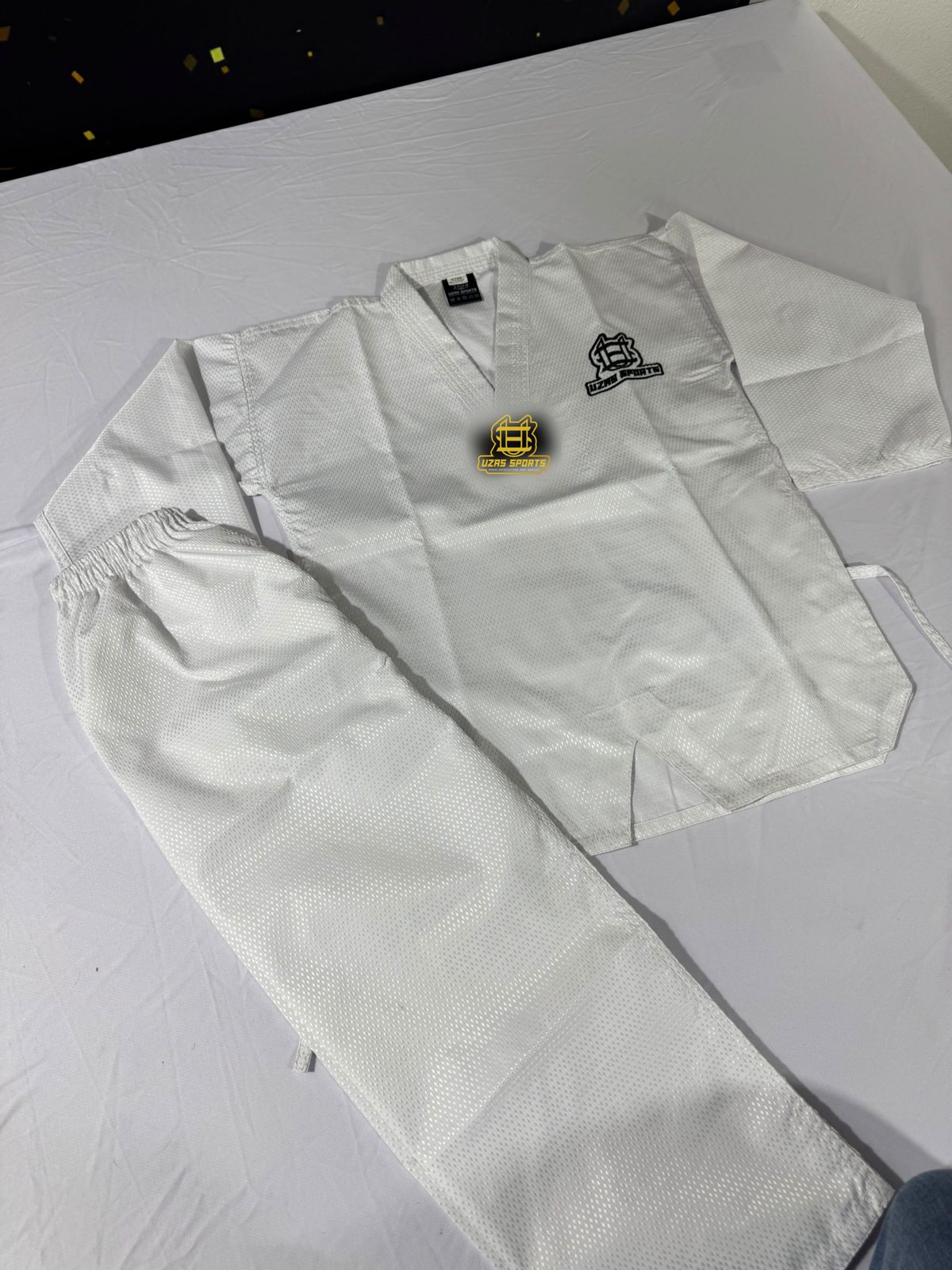
- Taekwondo: V-neck doboks with a white collar for coloured belts and a black or red-and-black collar for black belts and instructors. See our custom taekwondo uniforms page for collar options.
- Judo or traditional jiu jitsu: a strong middleweight jacket that stands up to gripping and throws.
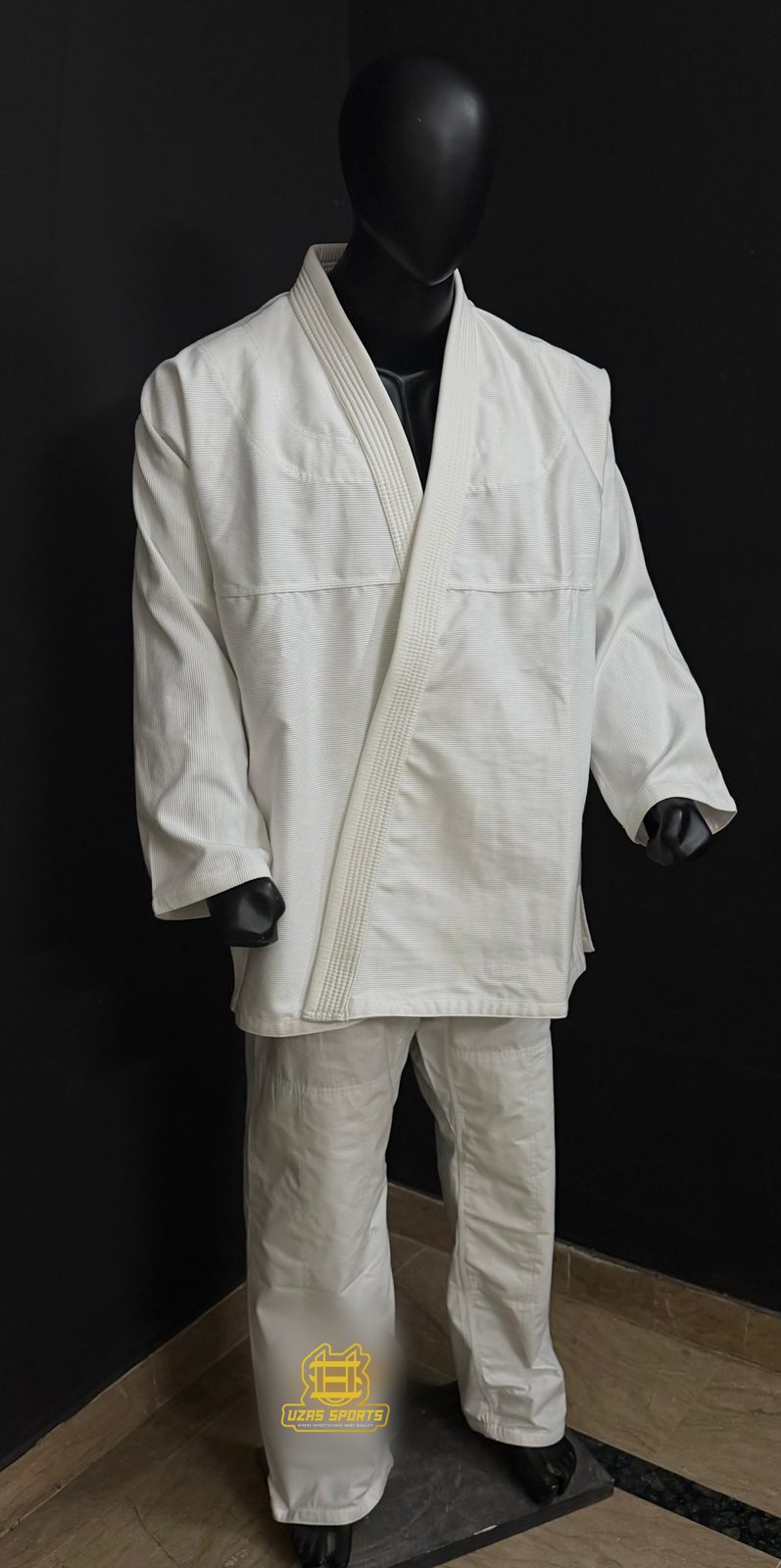
- BJJ: academy gis in men's, women's and kids' sizes, plus competition gis made to the IBJJF uniform rules for students who compete.
- No-gi and MMA: rash guards and fight shorts in the school design, with ranked rash guards if your BJJ programme uses them. Our custom rash guards page covers fabric and print.
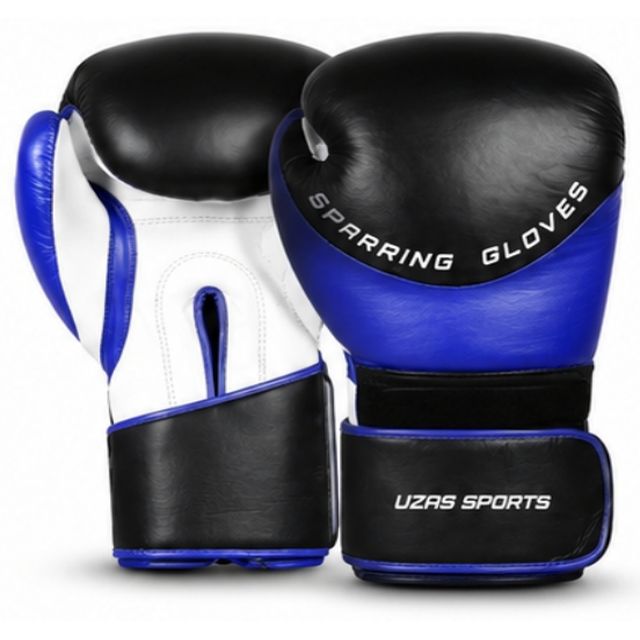
- Shared items: embroidered belts and rank stripes, sparring gear for taekwondo and kickboxing, and hoodies or t-shirts for parents, staff and team travel.
You do not have to order every item on day one. Many schools start with the uniform each student must wear and add belts, sparring gear and merch to the same order or the next one.
How do we keep the school brand consistent across different styles?
Write a one-page branding sheet before you ask for a quote. It saves the most time later, because every style is then built from the same rules.
- 1.One master logo file, in the best format you have. Our designers can redraw a low-resolution logo for embroidery at no charge.
- 2.Your brand colours, with Pantone codes if you have them, so thread and print colours match across cotton gis and polyester rash guards.
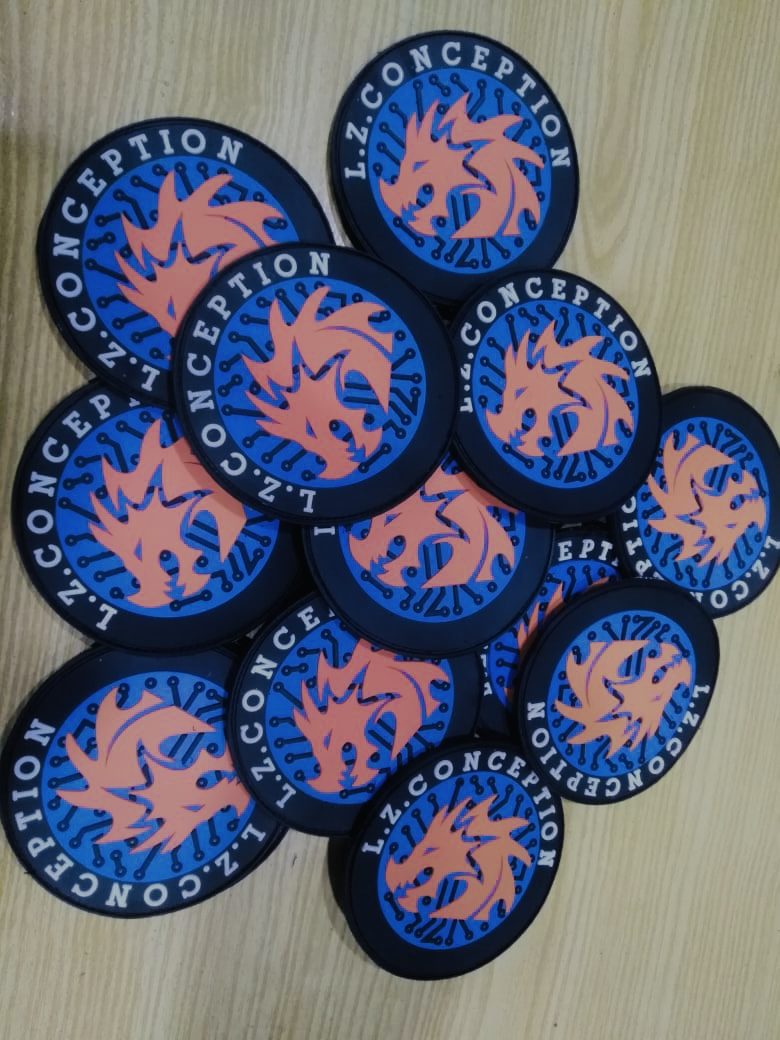
- 3.Where the logo goes on each item: chest, back, sleeve, pant leg or belt. Keep the chest logo the same size on every jacket.
- 4.What changes by programme. Some schools add the style name under the logo, such as Karate or Taekwondo, so instructors can see at a glance who is in which class.
- 5.What stays the same by rank. Rank is usually shown by belt colour, collar colour or a ranked rash guard, not by changing the logo.
For sublimated no-gi kit, the full design prints into the fabric, so it can carry your brand colours edge to edge without cracking or peeling. For cotton gis and doboks, the same logo is embroidered. Ask to see both on the prototypes side by side before you approve.
Which colour and rule differences do we need to respect for each style?
Consistent branding does not mean every uniform is the same colour. Each style has its own traditions and, if your students compete, its own rules. Check these before you lock the design:
- Karate: most dojos keep white gis for students, and some offer black gis for instructors or demonstration teams. If students compete, check your federation's rules on colour and logo size.
- Taekwondo: collar colour shows grade, so plan the split between white-collar and black-collar doboks. Federations that require approved uniforms or licensed logos set their own rules, so check them before ordering competition doboks.
- BJJ: for IBJJF events, gis must be white, royal blue or black, with patches only in permitted areas. Our IBJJF gi guide explains the gi check in detail.
- No-gi: many academies use a ranked rash guard with the belt colour on the body or sleeves. Decide early whether your no-gi kit is ranked or one design for everyone.
How do we plan sizes when students train in more than one class?
Sizing is where combined orders go wrong most often, because each style uses its own size system. A BJJ gi in A2 is not the same as a karate gi in the same height bracket, and a rash guard is sized like a fitted top, not a jacket.
Use one sign-up sheet for the whole school, with a row per student and a column for each item. Record height and weight as well as the size the student thinks they wear, so you can check every row against the right chart. Our size guide has charts for BJJ gis from A0 to A5, fight shirts, MMA and Muay Thai shorts, t-shirts and hoodies, and our BJJ gi size guide for academies explains how to plan a size run for adults, women and kids.
Add a few spares in the most common children's sizes for each programme. Kids grow out of their uniforms fastest, and new students often join after the order has gone in. Cotton gis and doboks should be ordered with shrinkage in mind and washed cold.
When should a school place a combined uniform order?
Work back from the date that matters most, usually the next grading, the start of term or a tournament. A combined order follows the same steps as a single-style order, it just has more items to approve:
- 1.Send your branding sheet, the list of items per programme and rough quantities. Our designers prepare the artwork for free.
- 2.Approve a complimentary customised prototype of each new style, with your logo, sent by air freight.
- 3.Bulk production starts after you approve and usually takes 2 to 4 weeks in our Sialkot factory.
- 4.Shipping: bulk orders normally go by sea freight, and urgent orders can go by air freight. Orders of 25 pieces or more ship free.
If only one programme is urgent, say so. The style with the closest grading can be prototyped and produced first, while the rest of the order follows.
What should we put in the quote request?
Use this checklist so the first quote is accurate and you do not lose a week to back-and-forth:
- Every programme you run and the items each one needs.
- Quantities per item, split by size, collar colour or rank where it matters.
- Your logo file, brand colours and the branding sheet with logo positions.
- Which students compete, and under which rules (for example IBJJF for BJJ).
- Extras: embroidered belts and rank stripes, taekwondo sparring gear, gym bags, hoodies or t-shirts.
- Private label needs if you also sell uniforms at the front desk: your own neck labels, swing tags and packaging.
- The date you need everything, and which programme is most urgent.
How UZAS Sports handles combined school orders
UZAS Sports has made custom martial arts uniforms in our own factory in Sialkot, Pakistan since 2005, with a showroom in Sialkot and booking offices in Melbourne and Chicago that take quotes, orders and enquiries. We make karate gis, V-neck taekwondo doboks, judo and BJJ gis, rash guards, fight shorts, belts and sparring gear, so one order can carry your logo across every class you teach.
There is no minimum order, our team offers free design help, and you approve a complimentary customised prototype with your logo before bulk production. We accept bank transfer, PayPal, Visa, Mastercard and Amex.
Common questions
Can one manufacturer make karate gis, taekwondo doboks, BJJ gis and no-gi gear for the same school?
Yes, if the factory makes all of those styles itself. UZAS Sports makes karate gis, V-neck taekwondo doboks, judo and BJJ gis, rash guards, fight shorts, belts and sparring gear in our own Sialkot factory, so one order can cover every programme with the same logo and colours.
Is there a minimum order per style in a combined order?
No. UZAS Sports has no minimum order, so a combined order can include a large run of student karate gis and only a handful of black-collar doboks or women's BJJ gis. Free shipping applies from 25 pieces, counted across the order.
Should every programme use the same uniform colour?
Not always. Keep the school logo and brand colours the same everywhere, but follow each style's own rules. Karate and taekwondo schools often keep white uniforms for students, taekwondo black belts wear a black or red-and-black collar, and BJJ students who compete under the IBJJF need white, royal blue or black gis.
How do we collect sizes for several programmes at once?
Use one sign-up sheet with a column for each programme. Record each student's name, height, weight, the programme and the item, so a student who trains karate and BJJ gets the right size in both. Check every size against the charts on our size guide page before you send the sheet.
Do we get a prototype for every style?
Ask for a complimentary customised prototype of each new style in the order, with your logo, so you can check the fabric, fit and embroidery before bulk production. If you are reordering a style you have already approved, you can usually skip that prototype.
How long does a combined school uniform order take?
After you approve the prototypes, bulk production usually takes 2 to 4 weeks. Allow time for the prototypes, which travel by air freight, and for shipping the bulk order, which normally goes by sea freight unless the date is close. Plan backwards from your next grading or term start.
- #CustomMartialArtsUniforms
- #MartialArtsSchool
- #CustomDobok
- #CustomKarateGi
- #CustomBJJGi
- #NoGiGear
- #MadeInSialkot